

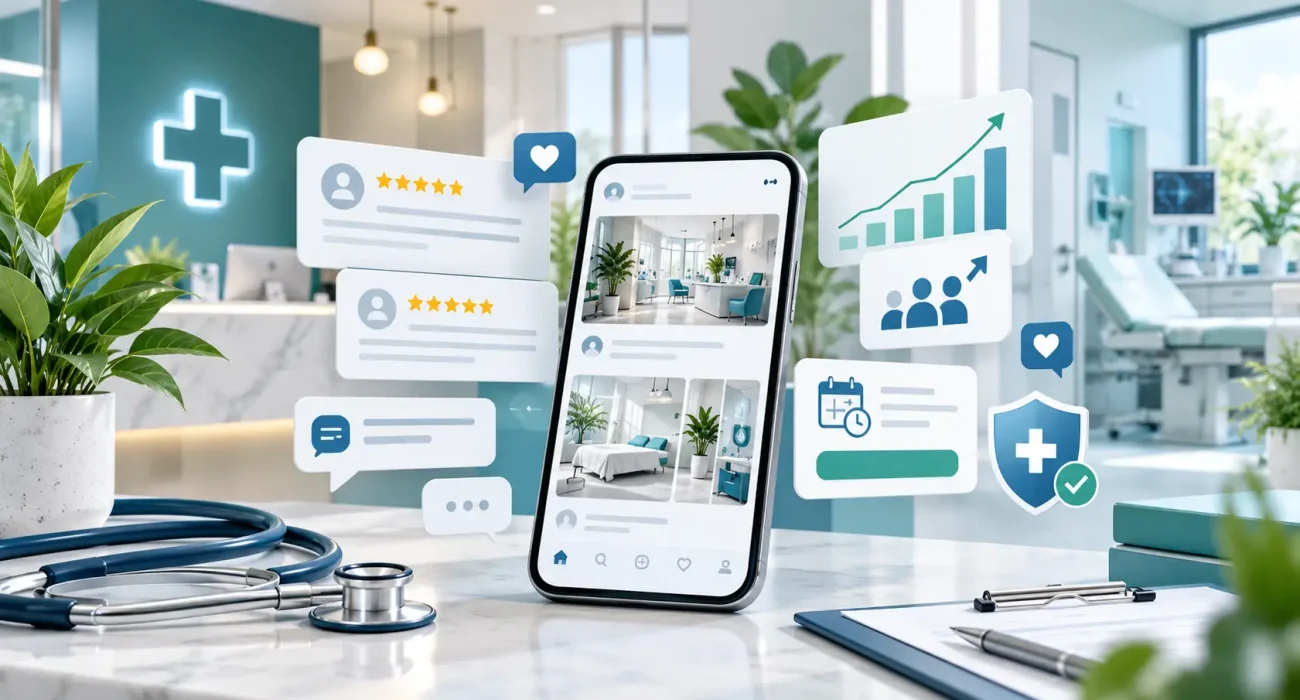
Social media has become an important communication channel between healthcare providers and their audiences.
Platforms such as Instagram, TikTok, Facebook, and YouTube allow clinics, medical centers, and healthcare professionals to educate potential patients, communicate their services, and strengthen their brand presence.
However, successful healthcare social media marketing requires more than posting attractive designs or promotional offers.
It requires a clear content strategy focused on education, credibility, consistency, and audience engagement.
Why Social Media Matters in Healthcare
Healthcare decisions are often influenced by trust.
Before contacting a medical provider, potential patients may explore their social media accounts to understand available services, professional expertise, and the overall quality of communication.
An active and informative social media presence can help healthcare brands establish familiarity and build credibility.
1. Develop a Clear Content Strategy
Every healthcare brand should have a content strategy aligned with its business objectives.
Instead of publishing random content, create a structured plan that addresses patient concerns and highlights the value of your services.
A balanced healthcare content strategy may include:
- Educational medical content.
- Service awareness posts.
- Frequently asked questions.
- Healthcare professional introductions.
- Behind-the-scenes content.
- General health awareness campaigns.
- Appointment and service information.
2. Use Short-Form Video Content
Short-form videos have become a popular format for sharing information across Instagram Reels, TikTok, and YouTube Shorts.
For healthcare brands, short videos offer an opportunity to explain complex services in a simple and engaging format.
Examples include:
- A physiotherapist explaining common posture mistakes.
- A rehabilitation specialist discussing the recovery process.
- A home healthcare provider explaining available services.
- A medical professional answering frequently asked questions.
Videos should communicate useful information clearly and avoid exaggerated claims or promises of treatment outcomes.
3. Build Trust Through Authentic Communication
Healthcare audiences value transparency and professionalism.
Introducing qualified healthcare professionals, explaining treatment processes, and sharing accurate educational information can help establish confidence.
Whenever patient stories, photographs, or testimonials are used, appropriate authorization and privacy safeguards must be in place.
4. Focus on Engagement, Not Just Followers
A large follower count does not automatically translate into business growth.
Meaningful engagement can provide stronger insights into audience interests and potential service demand.
Healthcare brands should monitor:
- Relevant comments and questions.
- Content saves and shares.
- Profile visits.
- Website clicks.
- Appointment inquiries.
- Qualified conversations.
These indicators help evaluate whether social media activity supports business objectives.
5. Maintain Consistency
Consistency helps audiences recognize and remember a brand.
A monthly content calendar can organize publishing schedules, educational themes, awareness campaigns, and service promotions.
Maintaining consistent messaging and visual identity also strengthens brand recognition.
6. Track and Improve Performance
Social media marketing should be evaluated regularly.
Analyze which content formats generate meaningful attention, which topics encourage engagement, and which channels produce qualified inquiries.
Use these insights to improve future content planning.
Conclusion
Social media marketing can play a valuable role in healthcare brand growth when supported by a clear strategy and trustworthy communication.
By combining educational content, short-form videos, consistent publishing, and performance analysis, healthcare organizations can build stronger relationships with their audiences.
Ready to improve your healthcare social media presence?
Ahmed Roshdy develops content strategies and social media marketing solutions that help healthcare brands communicate effectively, strengthen audience trust, and support long-term growth.